Baroque Fortification, Prague

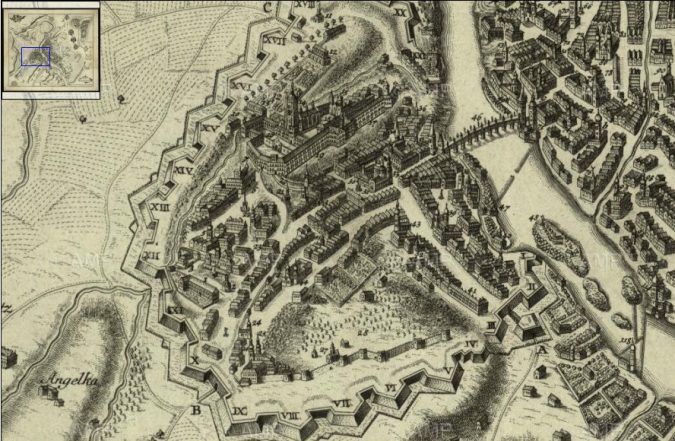
The Baroque curtain walls were constructed between 1653 – 1730 when Prague was redesigned into a Baroque fortress with a citadel located at Vyšehrad (Czech for “upper castle”). Neglected city walls around Prague were reconstructed and the old Gothic walls remained in place only in certain sections. The fortifications were reinforced with bastions (bulwarks). The Baroque “Marian” curtain walls, named after the small Virgin Mary Church near the Písecká brána (Sand Gate), led from the Prašný most (Powder Bridge) over across Pohořelec and Petřín towards the Vltava river, and on the other side towards Letná. Of the fortress entrance gates, only the Písecká brána (also called Bruská) has been preserved to the present day. The decision to get rid of the city walls was taken in 1860. The walls to the west of Písecká brána was demolished in 1898 and during the 1899 and 1901 years the Royal Military School (nowadays the Ministry of Defense) building was constructed in such place. The eastern part was gradually removed after 1901.

Details
Ministry of Defence, Prague

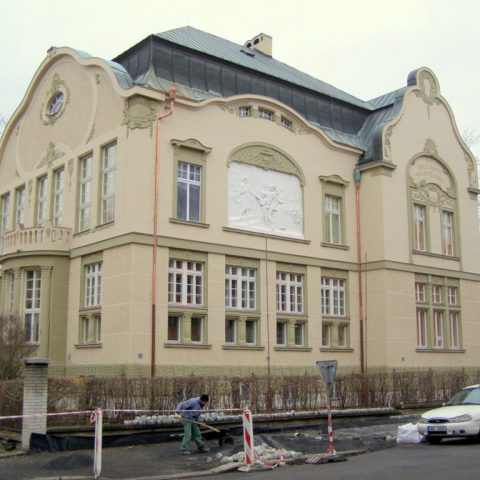
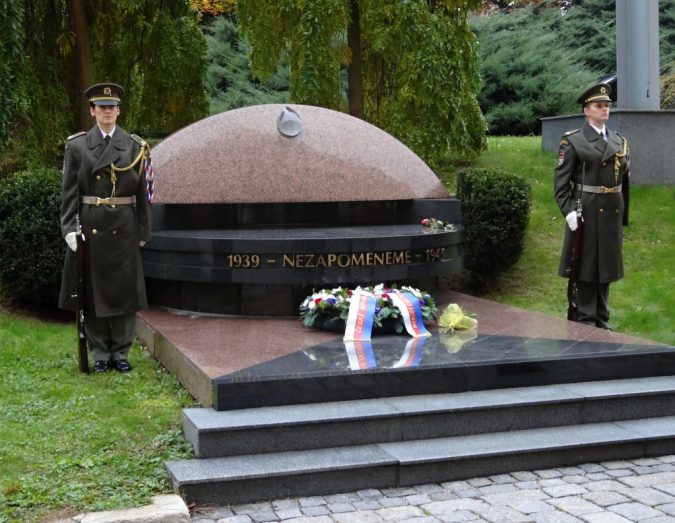
The monument is dedicated to the memory of one hundred and two officers – graduates of the War College who were executed by the Nazis in the years 1939–1945. The College was established in 1921 and was originally called the War School, but in 1934 it was renamed the War College. The College occupied the third floor of Tychonova Street no. 1 in Prague. The War College was operating until 1938, respective 1939, now this object became the seat of the Czech Minister of Defense and Armed Forces.

Details

Imperial Palace, Cheb

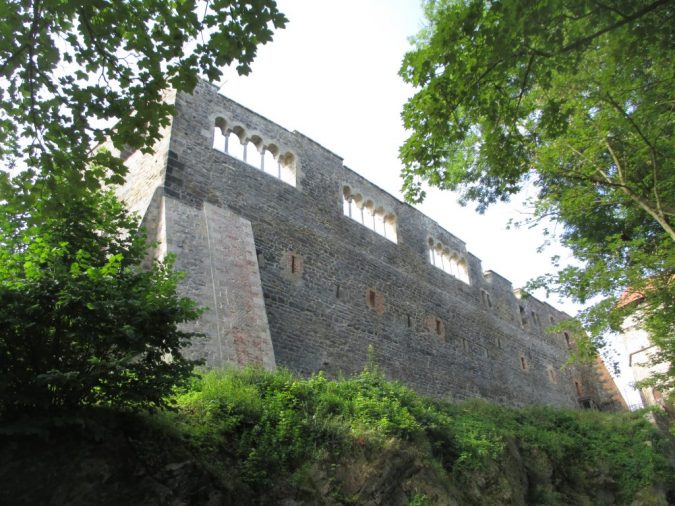
The emergency condition of the masonry of the Imperial Palace in Cheb, confirmed by expert opinions, and especially the collapse of part of the stone masonry in the central part of the north wall in 2013, required urgent professional intervention. Based on the restoration surveys carried out, in the years 2015–2017, the company GEMA ART carried out a professional conservation intervention. Professional work for the city of Cheb was carried out in three stages from 2015 to 2017.

Details

St. Wenceslas Rotunda, Prague

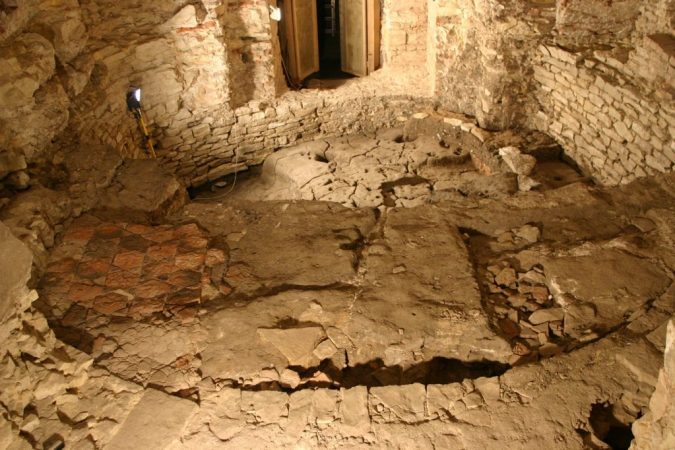
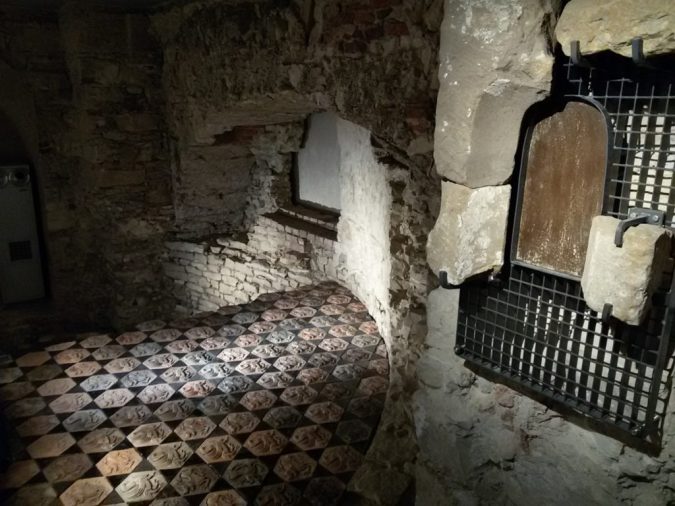
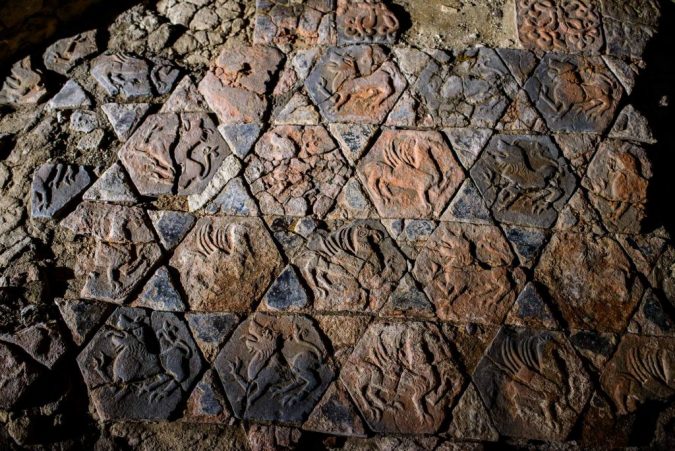
The St. Wenceslas Rotunda, first mentioned in the St. Wenceslas legend originating in the 13th century, was searched for by historians and archaeologists for centuries. It was located thanks to a comprehensive reconstruction of the building of Charles University’s Faculty of Mathematics and Physics situated at Malostranské náměstí (the Lesser Town Square).

Details

Koruna Hotel, Prague

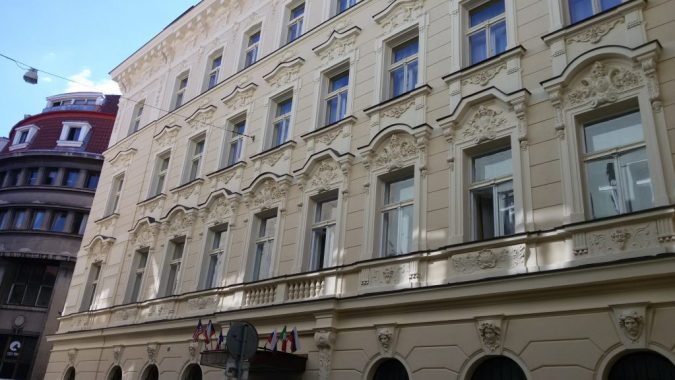
The subject of the contract works was the repair of the Koruna hotel façade. The house is located in a terraced street building on the corner of Opatovická and Černá streets. It was originally the rental house built in 1895 according to the design of Josef Bergmann. The building is a double-tract building with an arched staircase in the courtyard part. The house has a basement, 4 above-ground floors and an attic with a loft. There is no passage to the courtyard on the ground floor of the house. The reception, lobby and restaurant is located in the ground floor with entrances from the street.

Details

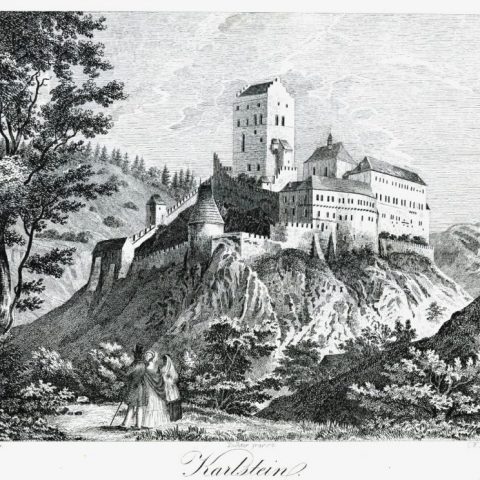
Žebrák Castle

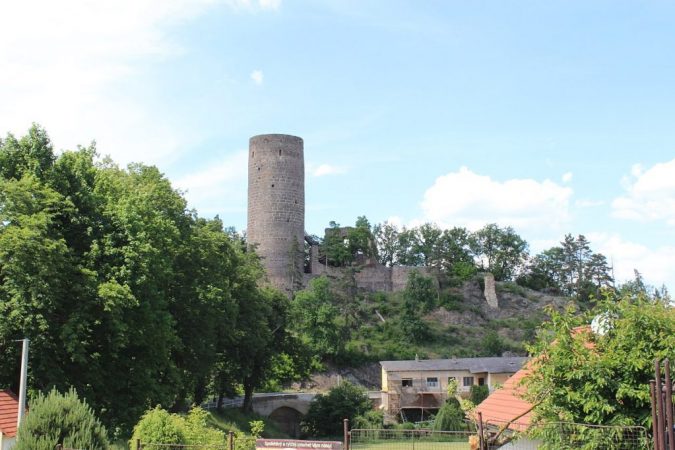
This project work aimed to perform emergency maintenance of the curtain walls masonry at the State Castle Žebrák. The castle was founded in the latter half of the 13th century by Oldřich Zajíc of Valdek near an important trade route leading from Prague to Bavaria. The castle was acquired by the Bohemian Crown during the reign of John of Luxembourg. The castle was expanded during the reign of Charles IV and his son, Václav IV, who also often stayed there, but after the fire of 1395, Václav IV ordered the construction of a new castle, Točník, on a nearby hill. The Castle Žebrák gradually lost his importance and by 1552 was mentioned as a ruin.

Details

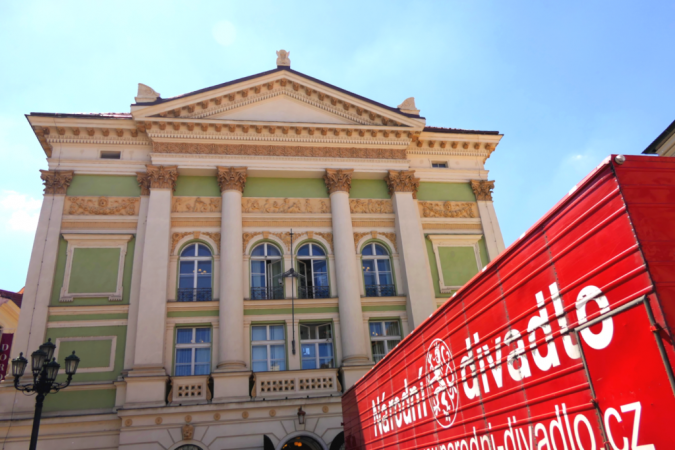
Estates Theatre, Prague

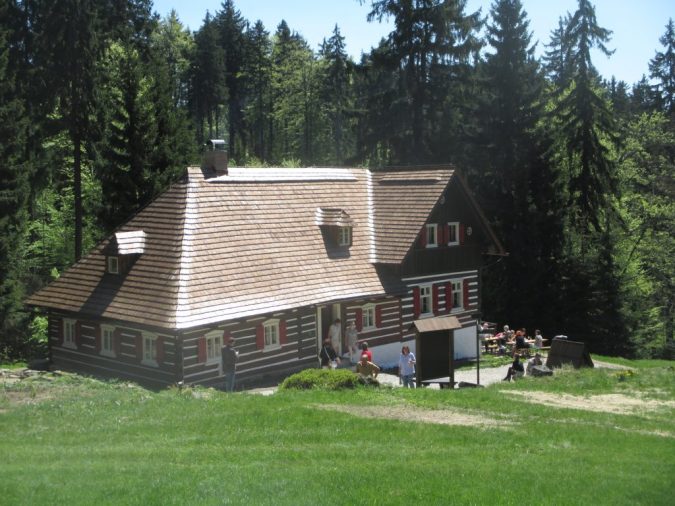
Předmětem rekonstrukce a restaurátorských prací bylo poslední stavení (roubenka) staré sklářské osady Kristiánov, která je součástí expozic Muzea skla a bižuterie v Jablonci nad Nisou.

Details

Glasswork Museum, Kristiánov

Awards for our work. GEMA ART received the PATRIA NOSTRA AWARD 2020 for the renovation of the Kristiánov Monument House No. 52 with the exposition of the “Glass Settlement Kristiánov” museum and the creation of an attractive excursion place in the Jizera Mountains.

Details